










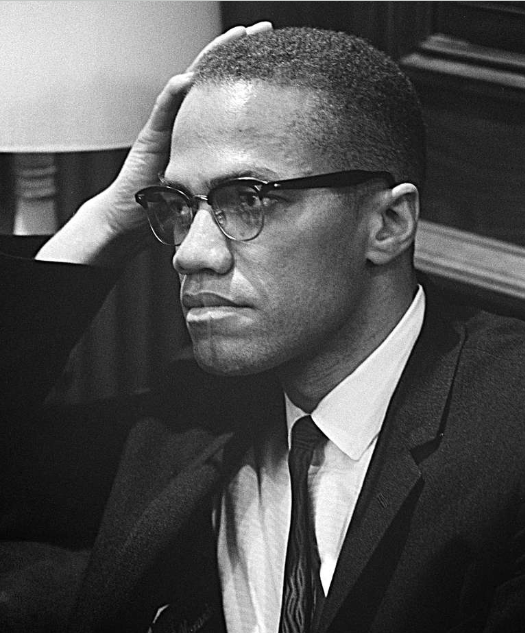








Before becoming one of the most powerful people in black power and freedom, Malcolm X lived a life filled with torment, rage, and confusion. Born Malcolm Little, he witnessed racism and hardship and endured major personal loss; his father died when he was young, and his mother was put in a mental institution. According to the Encyclopedia Britannica biography of Malcolm X, as a teenager, Malcolm was a criminal and eventually sent to prison in 1946. His time in jail became the turning point that reshaped his entire belief system.
While he was in prison, Malcolm was introduced to the teachings of the Nation of Islam, which started the beginning of his transformation. According to Britannica’s explanation of Malcolm X’s conversion, he converted to Islam during his sentence in prison after his family members, who had already become involved in the movement, influenced him to do so. Through religion itself, Malcolm obtained key values that he never had before: discipline, reason, and a new sense of identification. He educated himself intensely, reading extensively, and this allowed him to rethink his place and role in society. Islam, as Malcolm understood it at the time, helped him turn his anger into a focused set of beliefs.
Malcolm X’s understanding of Islam continued to expand. After Malcolm X completed the sacred pilgrimage to Mecca, known as Hajj, he left the Nation of Islam. This experience significantly changed him. According to the National Museum of African American History and Culture overview, his journey to Mecca “profoundly impacted his religious views and racial understanding,” which pushed him significantly to a more equal and global perspective on human rights. For the first time in his life, Malcolm saw people of all races practicing Islam together as equals, and this greatly challenged his earlier beliefs about racial segregation.
Malcolm later described this transformation in letters from Mecca. According to Malcolm X’s Letter from Mecca, he wrote that he had encountered “people of all colors…displaying a spirit of unity and brotherhood” that he had never thought was possible. This experience made him reinterpret many of his ideas he had, including his idea that all white people were cruel and brutal. Instead, he started to see racism as a system rather than a trait that is only tied to race itself.
This transformation shows how clearly and deeply Islam changed Malcolm X—and it’s not just politically, but personally. Before he got introduced to Islam, his life was the definition of survival and anger. Through the Nation of Islam, he obtained discipline and direction. But later when he developed a broader understanding of Islam, he learned a wider belief in unification, equality, and that all people deserve respect. According to analysis of Malcolm X’s Hajj transformation, his experience in Mecca helped him transition from someone who wants separation among people to one that’s focused on global agreement across races.
Malcolm X’s transformation from a troubled teenager to a strong leader shows the strength of belief and self improvement. Not only did Islam have a big impact on him and his message, but it also completely changed his personality, values, and understanding of the world. In addition to his strong speeches, he is still remembered in 2026 for his eagerness to grow, expand, and find out the truth. His transformation is still a powerful example of how a single change can completely transform a person’s life.